This post may contain affiliate links. If you make a purchase through these links, I may earn a small commission at no extra cost to you. Thank you so much for your support.
This DIY all purpose cleaner with vinegar is the one spray bottle I never want to run out of!
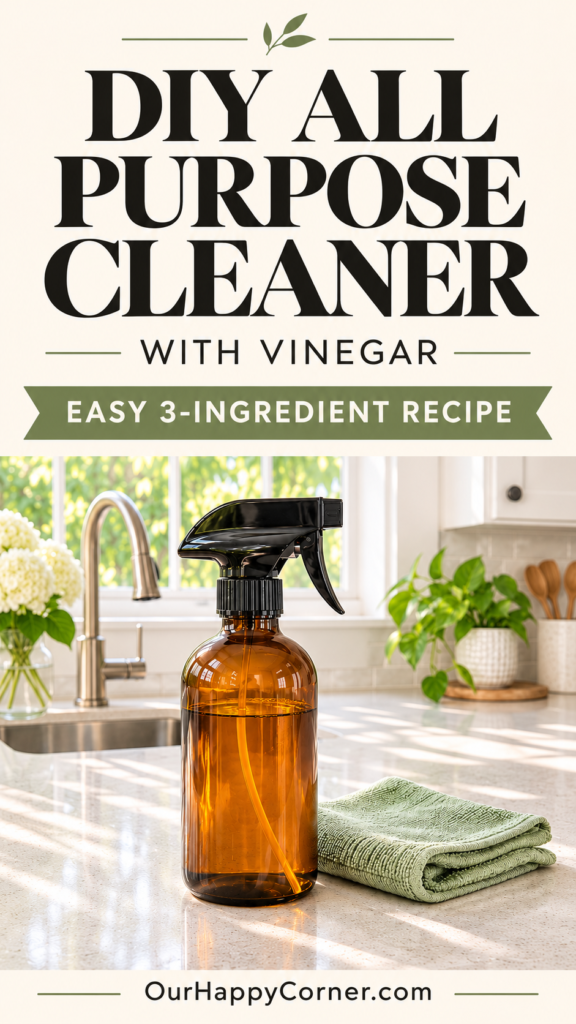
It takes about five minutes to make. It costs almost nothing. And you probably have most of the supplies in your kitchen right now.
Okay, but let’s talk about what vinegar can and can’t do. I want you to get the best results and not accidentally ruin your countertops!.
So I’m sharing the easy recipe, where to use it, where NOT to use it, and one important thing about germs that a lot of DIY blogs skip.
Why Make an All Purpose Cleaner with Vinegar
Vinegar is a mild acid, and that’s what makes it so good for cleaning.
It breaks down hard water spots, soap scum, and light everyday grime. It also helps with odors.
It’s budget-friendly too. A big jug of distilled white vinegar costs just a few dollars at the grocery store, and one jug makes a LOT of cleaner.
One note: vinegar is great on mineral buildup and soap scum, but it isn’t the best choice for heavy grease. For a greasy stovetop, a little dish soap and warm water will do a better job.
Does Vinegar Disinfect?
This is the part I really want you to know.
Vinegar can kill some bacteria. But it is NOT registered with the EPA as a disinfectant, and it isn’t proven to kill germs like norovirus or staph.
So think of this spray as a cleaner and deodorizer, not a germ killer.
If someone in your house has been sick, or you’ve been handling raw chicken or meat, use an EPA-registered disinfectant instead. Check the label for an EPA registration number, and follow the contact time on the bottle.
What Kind of Vinegar Should You Use?
Grab regular distilled white vinegar with 5% acidity.
That’s the standard kind in the grocery store aisle. It’s inexpensive, and it’s safe to use on surfaces where you prepare food.
You may also see “cleaning vinegar” at 6% acidity. It’s a little stronger, which is handy for heavy limescale on faucets and shower heads. But it is not food-safe, so I don’t recommend it for kitchen counters.
You don’t need organic. The cheapest bottle works just fine!
What You Need to Make Vinegar All Purpose Cleaner
You only need a few simple things.
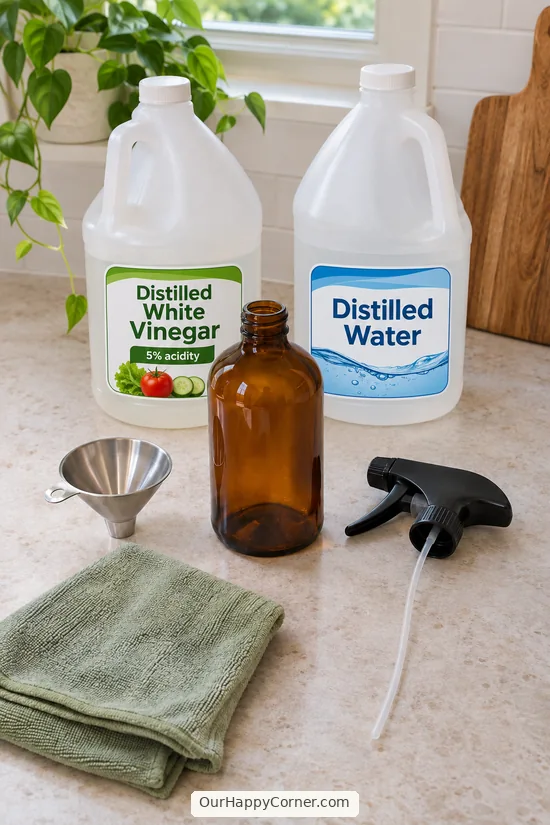
Distilled white vinegar: Look for 5% acidity on the label.
Distilled water: Tap water works if you’ll use the spray within a few days. Distilled water is better if you want it to keep longer, since it has fewer minerals and contaminants.
A 16 ounce glass spray bottle: Glass lasts for years and you can refill it again and again.
Microfiber cloths: These are perfect for wiping and dusting without leaving lint behind.
Essential oil (optional): I’ll explain why this one comes with a warning in a minute.
How to Make DIY All Purpose Cleaner with Vinegar
Ready? This is SO easy.
Step 1: Add the Vinegar
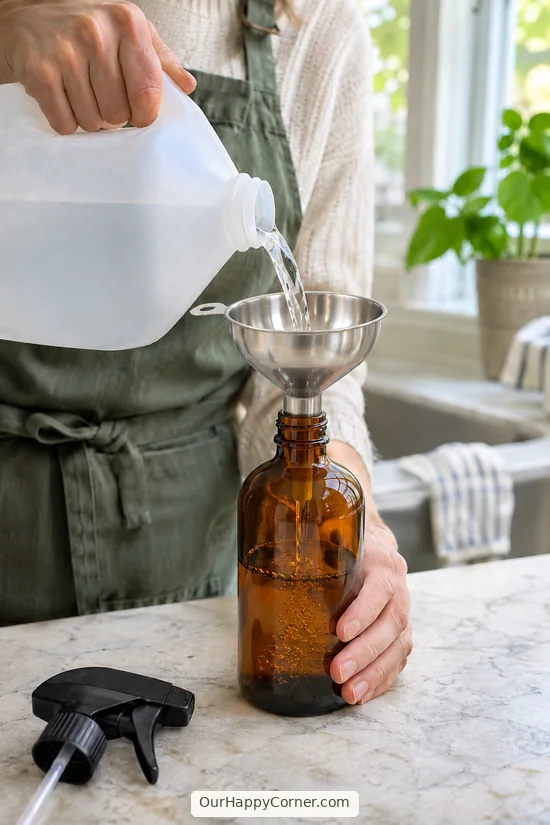
Place a small funnel in your spray bottle. Pour in 1 cup of distilled white vinegar.
Step 2: Add the Water
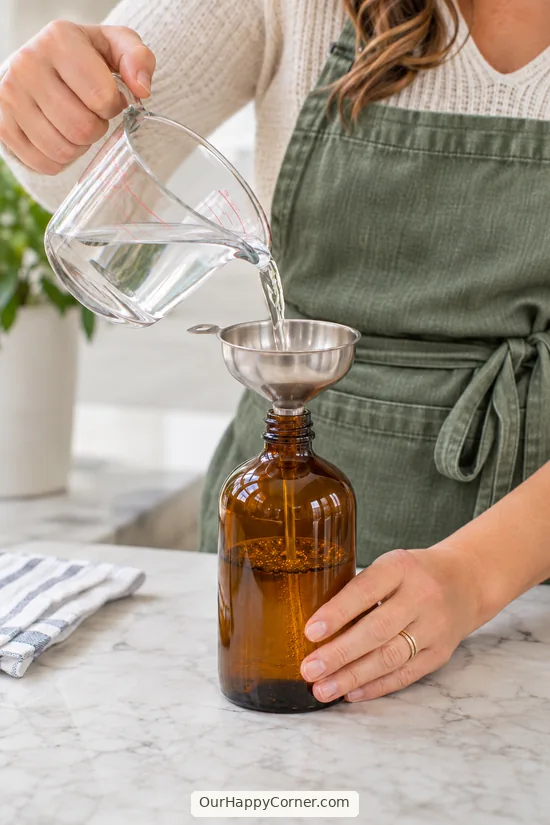
Pour in 1 cup of distilled water. That’s a 1:1 ratio, which is perfect for everyday cleaning.
A 16 ounce bottle will be filled right to the top with this amount. I like to use a slightly bigger bottle, or pour in a little less of each, so there’s room to shake.
Want a gentler spray for light dusting and quick wipe-downs? Use about 1/2 cup of vinegar to 2 cups of water instead.
Step 3: Add Essential Oil (Optional)
If you want a fresh scent, add up to 15 drops of essential oil.
Keep in mind that essential oil won’t turn this into a disinfectant. It’s only for scent. Oil and vinegar also don’t mix, so give the bottle a gentle shake each time you use it.
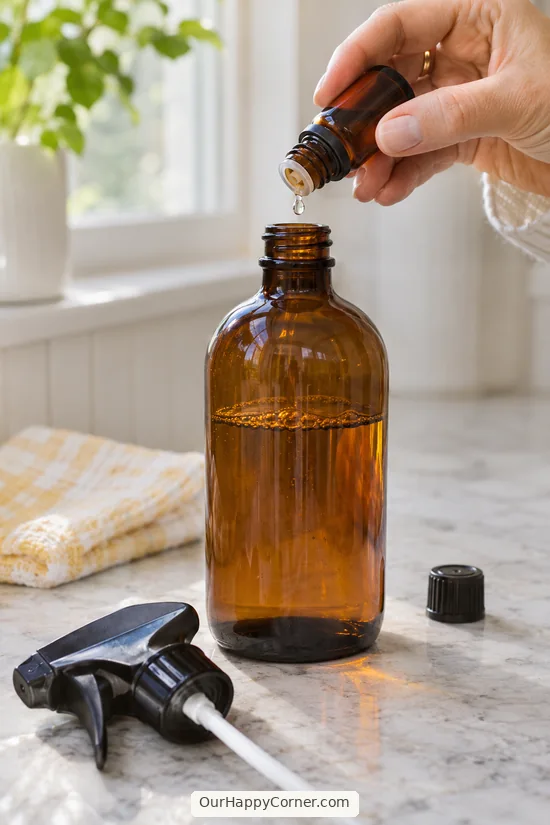
Please read this before you add any oils. Many essential oils are toxic to pets, especially cats. Citrus oils (like lemon and grapefruit), tea tree, peppermint, pine, and eucalyptus are on the list of oils vets warn about. If you have cats or other pets at home, skip the essential oil completely. The cleaner works just as well without it!
Step 4: Shake and Label
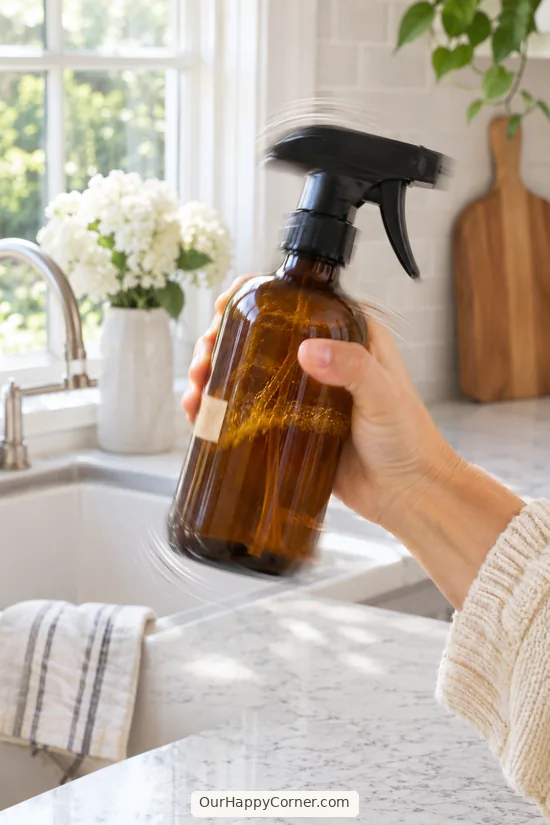
Put on the spray nozzle and gently shake to combine.
Then label your bottle! Write “Vinegar Cleaner” and the date on a piece of masking tape. It’s an easy way to keep you from mixing it up with other cleaners.
How to Use This All Purpose Cleaner
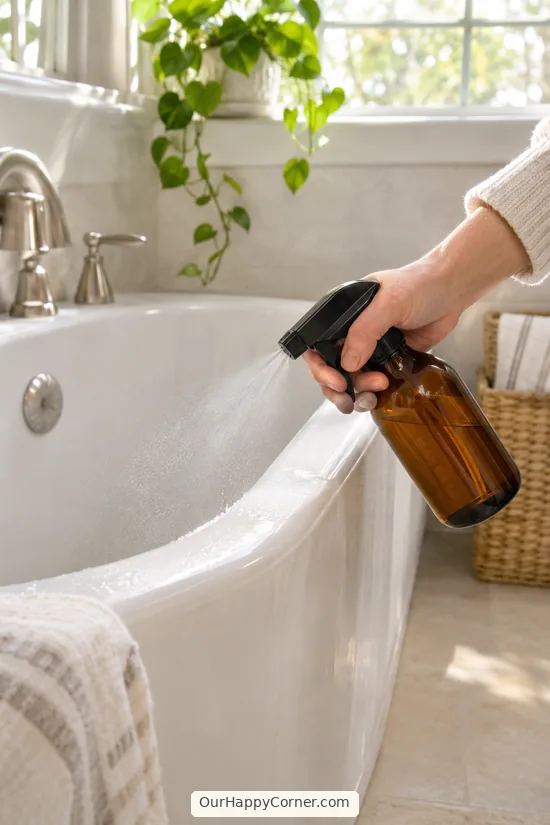
Spray the surface (or spray your cloth), then wipe clean with a microfiber cloth.
For stubborn spots, let it sit for a minute or two before wiping.
Here are my favorite places to use it:
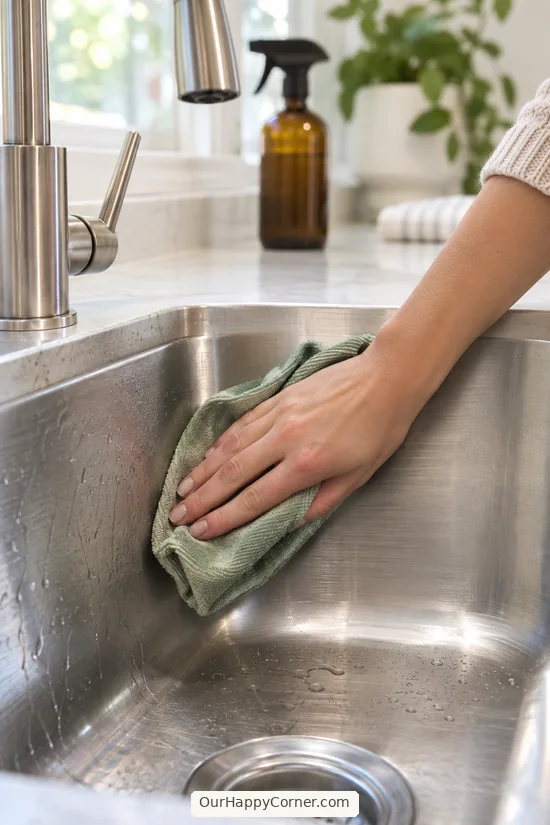
Sinks and bathtubs are a great place to start. The vinegar helps with soap scum and water spots. I also love it on sealed kitchen counters, laminate surfaces, and tables, plus doorknobs and light switches for a quick wipe-down.
Stainless steel appliances look great with it too. Just wipe in the direction of the grain.
It works on glass and mirrors as well! Use a clean microfiber cloth so it doesn’t streak.
Bathroom counters and the outside of the toilet are good spots too. You can even spray inside the toilet bowl and scrub with a brush. Just never use it together with a toilet bowl cleaner that contains bleach.
Dirty toys are okay to wipe down. Just go over them with a damp cloth afterward, since you don’t want vinegar residue on something kids might put in their mouths.
Where NOT to Use Vinegar Cleaner
This is where a lot of people run into trouble. Vinegar is an acid, and acid can damage certain surfaces.
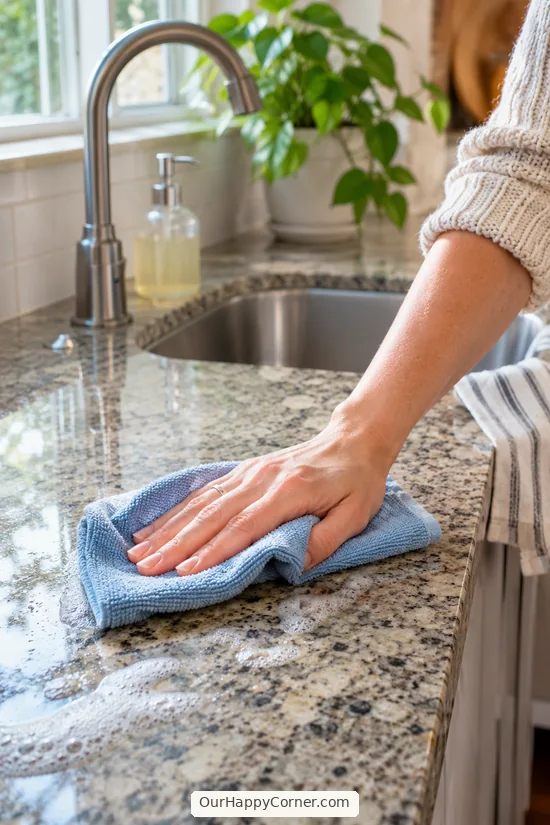
Don’t use it on granite, marble, or other natural stone countertops. Over time it can dull the finish and cause etching. Hot water and a little mild dish soap is a safer choice.
Skip it on hardwood floors, since it can dull the finish. The same goes for waxed wood furniture.
Avoid unsealed or cracked grout, because vinegar can wear it down.
Keep it away from phone, tablet, laptop, and TV screens, and from the touchscreen in your car. Vinegar can damage the coatings on electronics.
If you have engineered quartz counters, check your manufacturer’s care instructions first.
Never Mix Vinegar with These
Please don’t skip this part, mama.
Never mix vinegar with bleach. It releases toxic chlorine gas.
Never mix vinegar with hydrogen peroxide in the same bottle. Together they make peracetic acid, which can irritate your eyes, skin, and lungs.
And don’t combine it with ammonia either.
If you want to use more than one cleaner, use them separately, and rinse the surface between products.
What If You Hate the Smell of Vinegar?
I get it! Not everyone loves that salad dressing smell.
The good news is that it fades quickly once the surface dries.
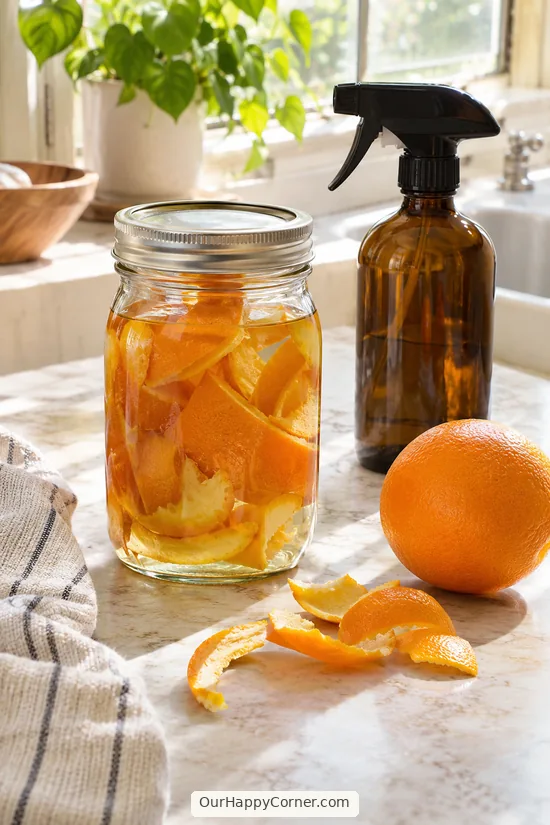
If you want a nicer scent without essential oils, make a citrus peel vinegar. Fill a clean jar with orange or lemon peels, cover them with distilled white vinegar, and let it sit for a couple of weeks. Strain out the peels, then use that infused vinegar in the recipe instead of plain vinegar.
Or skip the vinegar completely and use a castile soap and water cleaner instead.
How to Store Your Cleaner
Keep the bottle in a cool cabinet, away from direct sunlight and out of reach of kids and pets.
Make small batches. I mix a fresh bottle every few weeks, especially if I used tap water.
Always keep that label on the bottle so nobody mistakes it for something else.
Your New Favorite Cleaning Spray
See? You don’t need a pile of expensive cleaning products to keep your home fresh!
A little vinegar, some water, and a spray bottle are really all it takes for everyday cleaning. Just remember to keep it off natural stone, wood floors, and electronics, and use a real disinfectant when you need to kill germs.
Do you already make your own cleaning spray? Tell me in the comments what you use it on!