This post may contain affiliate links. If you make a purchase through these links, I may earn a small commission at no extra cost to you. Thank you so much for your support.
A winter wreath is such a lovely way to make your home feel welcoming after the Christmas decorations come down.

I always like a little breathing room after December, but a completely bare door can feel unfinished. A few branches, a soft ribbon, or some natural texture can make the entrance feel cared for again.
These ideas cover everything from full greenery to simple hoops, wool, dried flowers, and weathered wood. There are options for a front door, a covered porch, and those indoor corners that could use a quiet seasonal touch.
You do not have to start from scratch, either. Look at the wreath bases and ribbons you already own, remove the clearly Christmas pieces, and see which of these looks feels right for your home.
Choosing a Wreath for the Weeks After Christmas
Before choosing a winter wreath, think about where it will hang. A dry indoor wall can handle wool, felt, and fragile dried flowers; an exposed door needs materials and fastenings that can cope with the weather.
Check the finished width against the door, including any stems that extend beyond the ring. Leave the handle, lock, and door frame clear, and make sure the door closes without crushing the wreath.
Choose a hook or over-door hanger that suits both the surface and the finished weight. A decorative ribbon can hide a strong hanging loop, but delicate stems and loosely tied bows should not be carrying a heavy arrangement.
For a fresh after-Christmas look, keep the natural textures and simplify the extras. Blue, cream, taupe, blush, and muted plum ribbons can change the mood without asking you to buy an entirely new collection of decorations.
Winter Wreath Ideas
1. Asymmetrical Eucalyptus and Grapevine
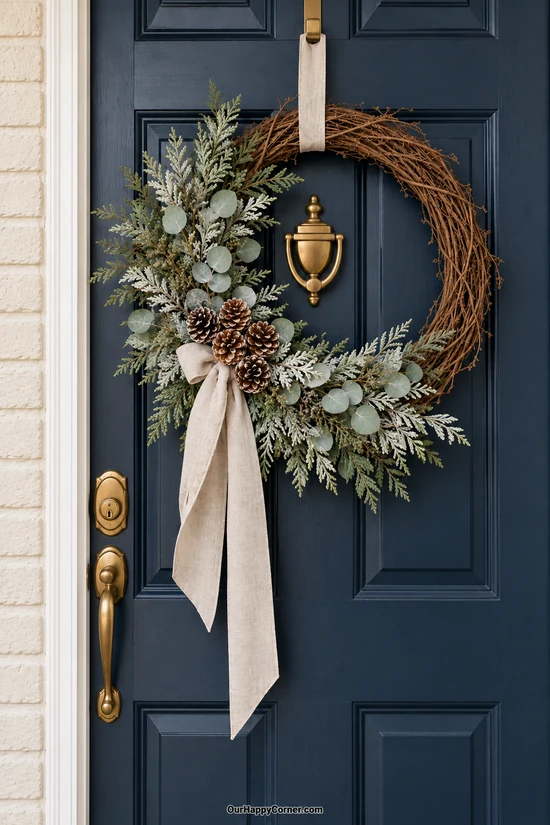
If taking down the Christmas decorations leaves your door looking a little bare, this is such an easy direction to go. The exposed grapevine keeps everything airy, while eucalyptus and frosted cedar bring just enough fullness to one side.
I love the oatmeal ribbon against the navy door. It softens the darker paint without making the whole arrangement feel pale or washed out.
To put together a similar winter wreath, start with a grapevine ring and wire small greenery bundles around the lower-left curve. Face the stems in the same general direction, then tuck pinecones over the joins.
Leave the top-right section uncovered so you can still appreciate the branches. A secure hanger and a bow with two loose tails are all it needs to finish the entrance.
2. Juniper, Cedar, and a Blue Velvet Bow

This one is for anyone who wants to keep the greenery after the ornaments have gone away. The blue berries and soft cedar tips give it that lovely winter feeling without needing anything sparkly.
The blue velvet ribbon picks up the berries beautifully. Against a warm wooden door, the cooler colors feel especially fresh.
For this winter wreath, build overlapping bundles of juniper and cedar on a wire ring, working around in one direction. Use florist wire to secure each bundle, keeping the center open rather than filling every gap.
An outdoor-rated faux version is useful if you want the same look for weeks. If you use fresh cut greenery, check it regularly and replace pieces as they become brittle or brown.
3. Chunky Ivory Wool with Pinecones
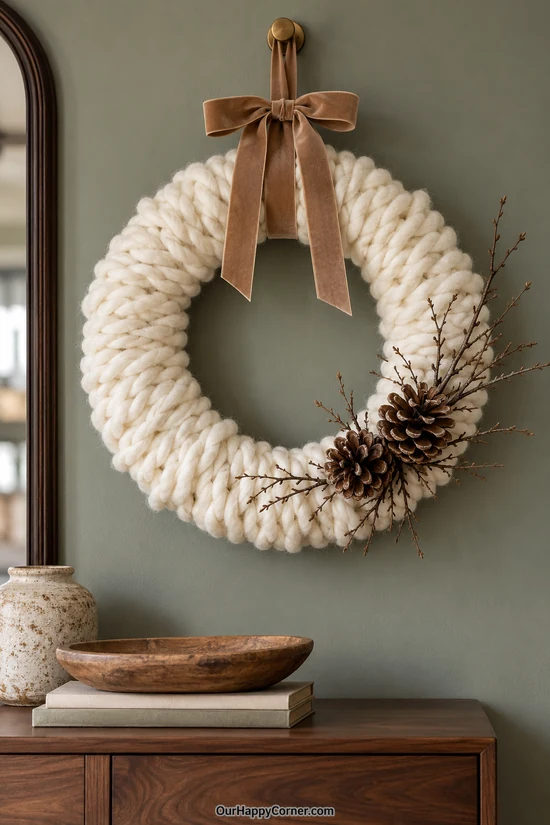
There is something so comforting about chunky wool in January. This ivory ring brings that sweater-like texture to the wall, with a small pinecone cluster to keep it connected to the season.
I would hang this winter wreath indoors, somewhere you can enjoy the wool up close. A sage wall, wooden console, and simple pottery make a lovely backdrop.
Wrap a foam wreath form with thick yarn, keeping the strands close enough to hide the base. Secure the ends at the back, then attach a small wired twig-and-pinecone bundle to one side.
Keep the twig tips away from walkways and use the ribbon loop as a proper support. The wool is the main feature here, so there is no need to cover it with lots of extra decorations.
4. A Brass Hoop with Dried White Flowers
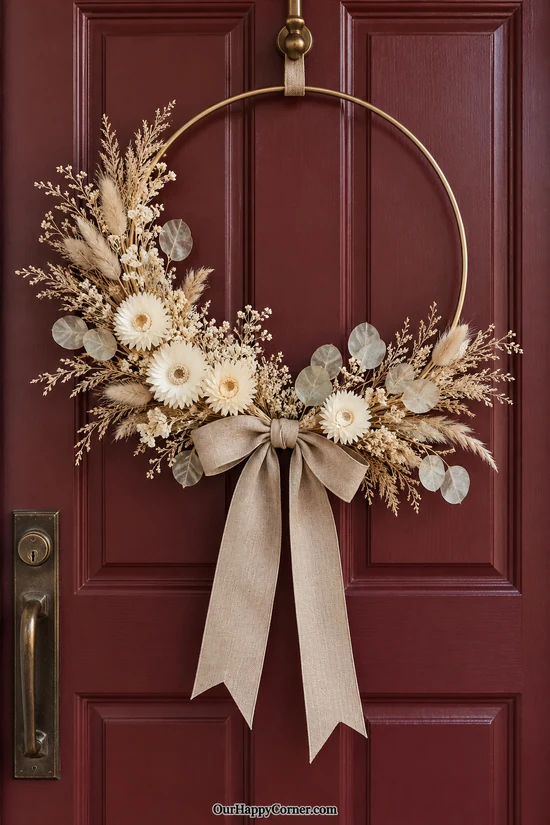
A thin brass hoop is a lovely choice when you prefer a lighter arrangement. The open circle gives the flowers room to stand out and lets the color of the door become part of the display.
The pale strawflowers, papery seedpods, and soft grasses look beautiful against burgundy. That warm background gives the creamy materials definition.
Arrange the dried stems into a shallow crescent along the bottom of the hoop. Bind small bundles with fine florist wire, overlap their ends, and hide the final join beneath a linen bow.
This winter wreath is best kept indoors or in a genuinely dry, sheltered entrance. Dried petals are delicate, and a windy door can quickly undo that airy shape.
5. A Snow-Tipped Pinecone Ring
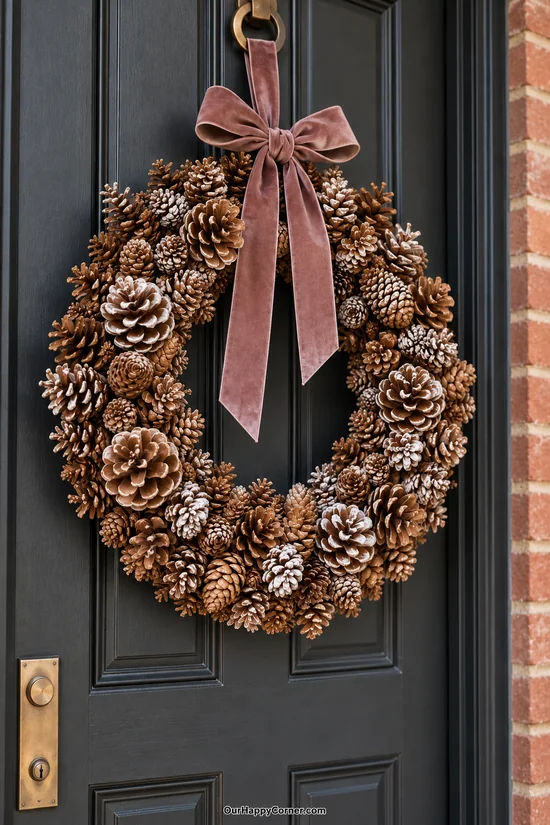
A pinecone wreath has plenty of character before you add anything else. Mixing smaller cones with a few larger ones gives the surface a natural rhythm instead of a perfectly matched pattern.
The dusty mauve bow makes this winter wreath feel softer than a traditional red holiday version. I would keep that ribbon color when the Christmas decorations come down.
Use a sturdy vine or wire base and attach each cone securely with florist wire around its lower scales. Work in small groups, filling larger gaps with the smaller cones.
If you want the snowy finish, dry-brush a little white craft paint onto selected tips. Let it dry completely before hanging, and choose a hook rated for the finished weight.
6. Pussy Willow and Bare Twigs
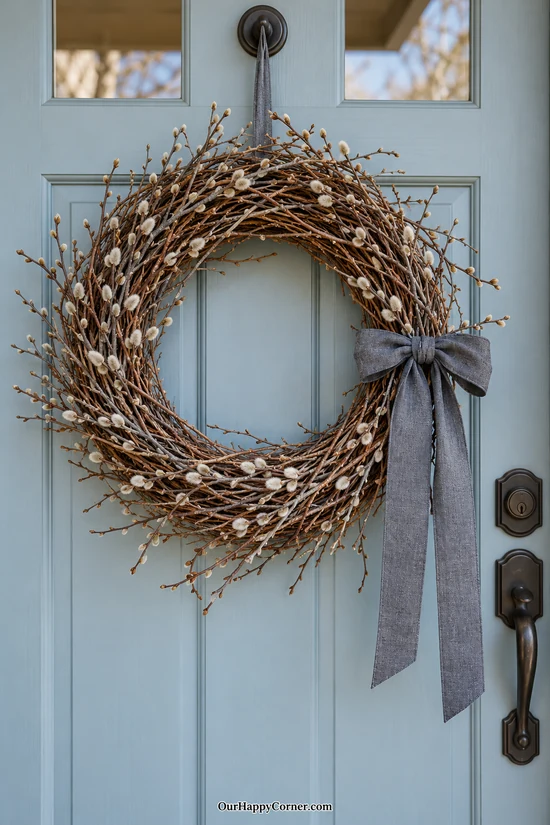
Bare branches can be just as pretty as full greenery. Here, the soft willow catkins add little points of texture without hiding the tangled brown stems.
This winter wreath looks especially gentle against the pale blue door. A slate ribbon gives it enough contrast while keeping the whole palette quiet.
Start with a ready-made twig ring, then wire in short pussy-willow stems so their tips follow the curve. Use small overlapping sections rather than trying to bend one stiff branch around the entire circle.
Keep the center generous and trim any long stems that catch on the door frame. This is a lovely option when you want winter decor that can stay up as the season begins to change.
7. Cream Dried Hydrangeas
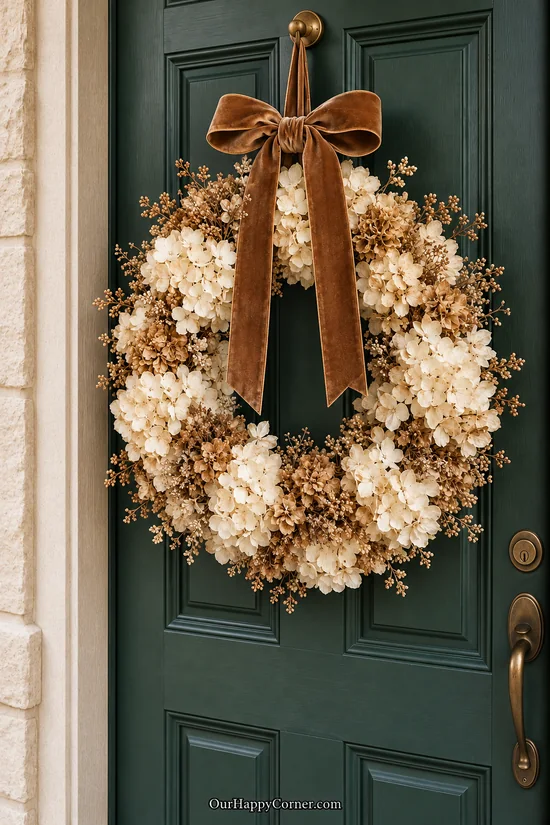
If you like a fuller wreath but want something softer than evergreen, dried hydrangeas are worth a look. Their little papery florets create a cloud-like ring with plenty of texture.
The mix of cream and tan keeps it from looking too uniform. A copper-brown velvet ribbon adds warmth against the deep green door.
Build this winter wreath with small dried hydrangea clusters attached to a vine base. Tuck a few dried seed-head stems between the clusters, checking that the outer edge still feels balanced.
Keep it away from rain and repeated door slamming, which can shake loose fragile petals. Indoors, it would also be beautiful above a console with just a bowl or a pair of books underneath.
8. Olive Leaves on a Terracotta Wall
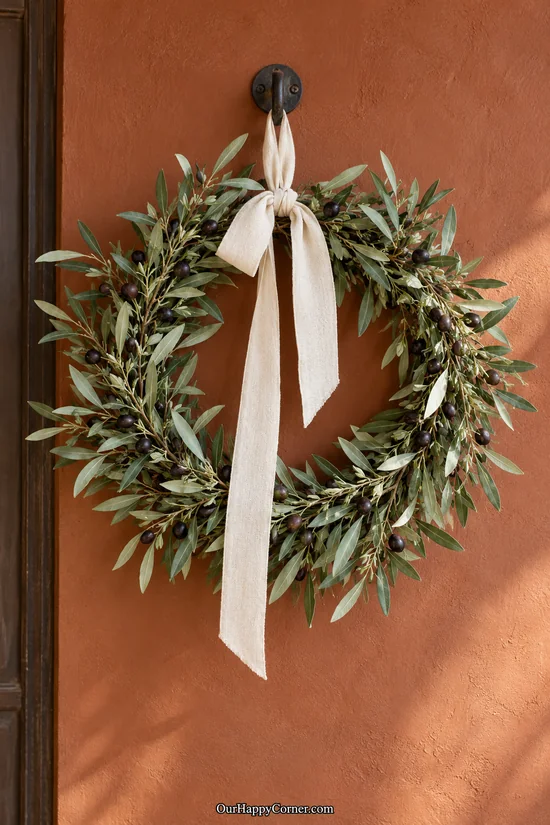
Winter decorating does not have to involve snow. Olive leaves bring a quiet green touch that feels right in a milder climate or a home with warmer colors.
The terracotta wall is such a lovely partner for the silvery leaves. A few dark olives add detail without making the arrangement busy.
For a similar winter wreath, attach short olive branches to a vine ring and let some tips extend beyond the base. Good faux olive stems can make this an easy display to bring out again next year.
Finish with a simple cream ribbon and let the wall do the rest. If you are carrying the look into the room, borrow the natural textures from our white Christmas decor ideas and keep only the neutral pieces after the holiday.
9. Birch Twigs with Moss and Fern
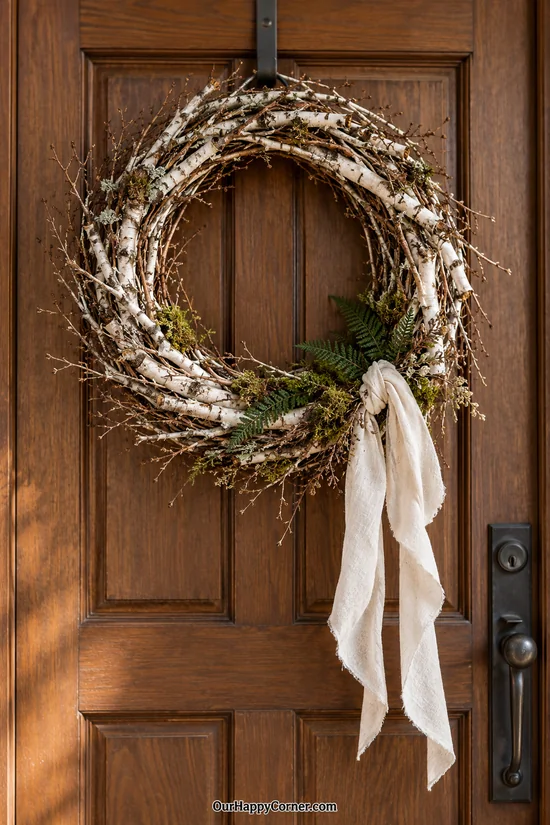
The little patches of white birch bark are what make this design stand out. They break up the brown twigs and give the wreath a woodland feel without needing a snowy coating.
A small moss-and-fern cluster is enough to soften the bottom curve. I like that the rest of the branches remain visible.
Use a sturdy twig wreath as the foundation, then wire short birch pieces over it. Attach preserved moss in a small area and tuck in a few faux fern fronds, securing the stems behind the branches.
An ivory ribbon finishes this winter wreath nicely against a dark wooden door. Keep preserved moss sheltered from rain, and check that the back of the arrangement will not scratch the paint.
10. Muted Lavender and Silvery Leaves
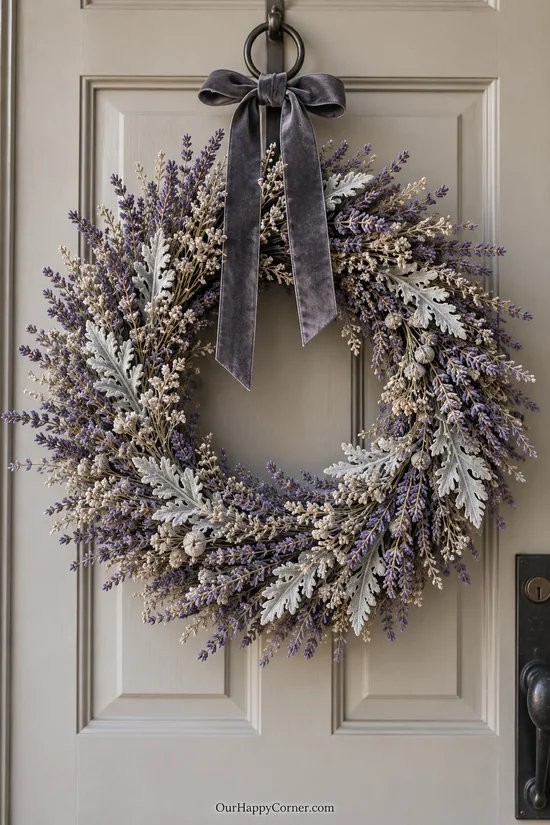
A little lavender brings color to winter without turning the door into a spring display. The muted purple sits beautifully with the silvery foliage and charcoal ribbon.
There is plenty to enjoy up close here: tiny flower spikes, pale seed heads, and soft-looking leaf shapes. Keeping those colors restrained helps the mixed textures feel calm.
Layer small dried-lavender bundles around a straw or vine ring, then add preserved or faux silvery foliage between them. Keep the stem ends covered as you work around the base.
I would use this winter wreath on an interior door or a dry covered porch. If you prefer a lower-maintenance version, choose realistic faux lavender and check its suitability for the location.
11. Oatmeal and Ivory Pom-Poms
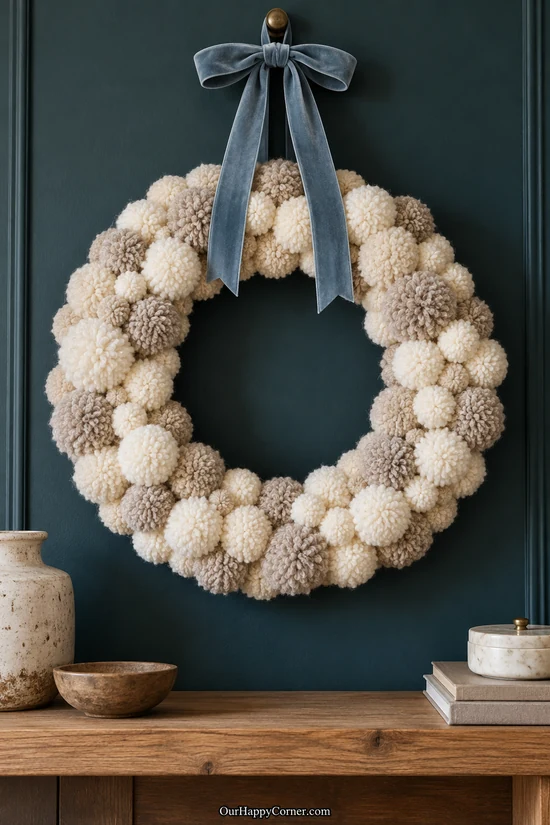
This is a fun option if you love winter textures but would rather skip foliage. The little wool pom-poms make a soft, full ring that feels cheerful without being overly sweet.
Mixing ivory with oatmeal gives the surface depth. The blue ribbon and teal wall keep those pale colors from disappearing into the background.
Tie handmade pom-poms tightly around their centers, leaving long tails. Use those tails to fasten them through or around a wire wreath form, then trim only once the knots are secure.
Hang this winter wreath indoors, away from damp air and muddy hands. If children want to make their own seasonal decorations alongside you, our winter crafts for kids have some lovely smaller projects.
12. Magnolia Leaves in Green and Copper
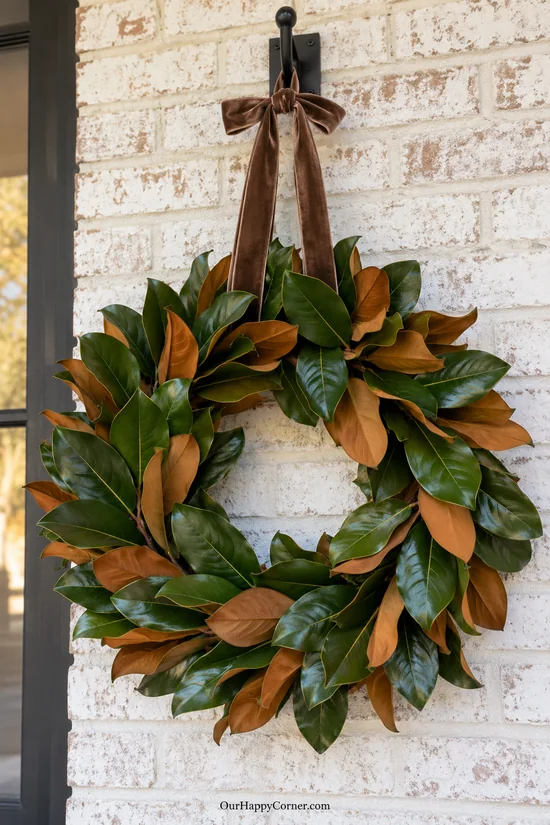
Magnolia leaves are such a good reminder that green does not have to look Christmassy. Their coppery backs bring a warm, natural contrast all on their own.
I like the leaves facing in slightly different directions here. You get glossy green, soft brown, and little shadows between the layers.
To make this winter wreath look full, attach small overlapping magnolia bundles to a sturdy ring. Turn some leaves backward deliberately, then step back before adding more so the open center stays clear.
A brown ribbon is enough to finish it. For more ways to repeat those materials around an entrance, look at the magnolia-and-citrus styling in our Christmas porch decor ideas, then leave out the holiday accents.
13. Dried Orange, Bay Leaves, and Cinnamon
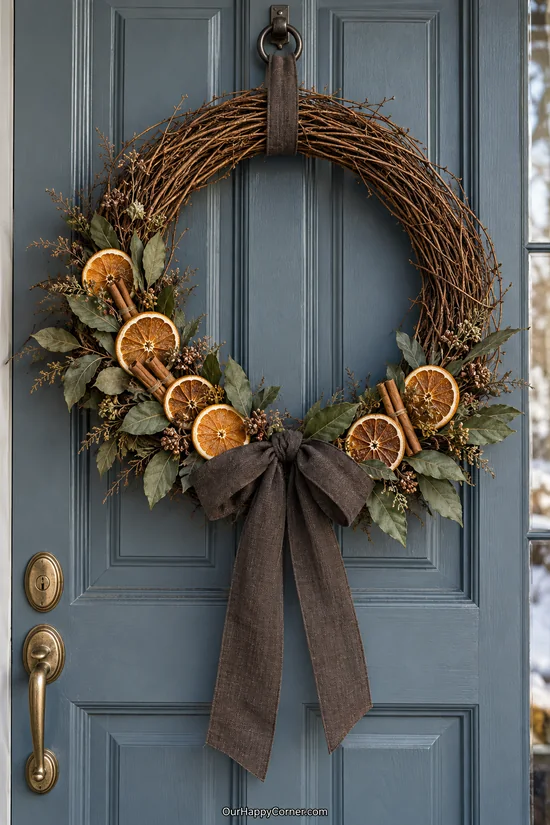
If you already dried orange slices for December, you may be able to give them another outing. Paired with bay leaves and a dark linen bow, they make a warm winter display.
The exposed upper section of grapevine keeps the arrangement from becoming heavy. I would stick with a few well-spaced slices rather than covering the whole ring.
For this winter wreath, use completely dried, sound orange slices and wire them gently to the base through their firm outer edges. Tie cinnamon sticks into little bundles before attaching them among the bay leaves.
Keep the wreath dry and discard any fruit showing mold or deterioration. You can find a related natural-material combination in our lantern decorating ideas if you want a coordinating sheltered display.
14. Papery White Lunaria
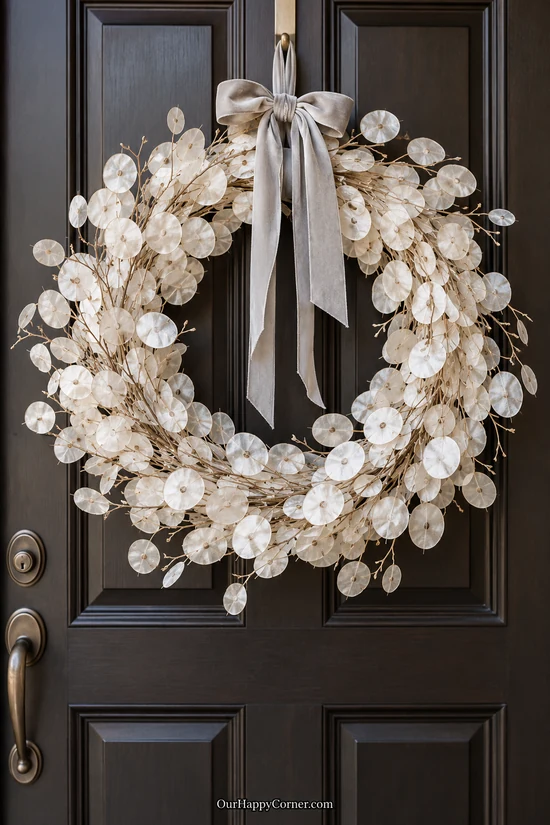
Lunaria has such a pretty, almost pearly finish. The thin seedpod membranes catch the light, making a pale wreath feel interesting even without bright flowers.
Against a dark door, you can really see the little stems and translucent discs. The dove-gray ribbon suits that delicate look beautifully.
Wire short dried lunaria stems around a lightweight vine ring, overlapping them gently rather than pressing them flat. Keep the wire around the stems, not across the fragile discs.
This winter wreath deserves a sheltered spot. An interior door is often the easiest choice, especially if your front entrance gets strong wind or rain.
15. Simple Boxwood with Blush Ribbon
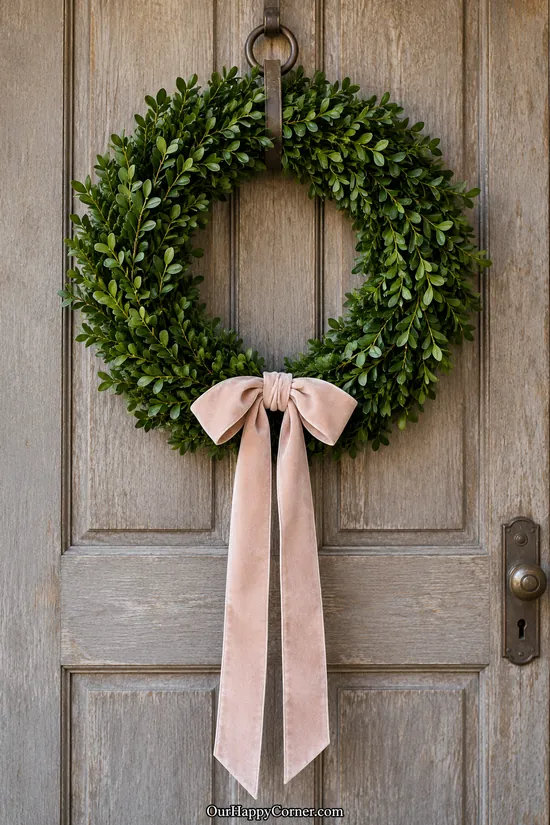
A neat boxwood ring is one of those pieces you can style in different ways throughout the year. For winter, the pale blush velvet ribbon gives it just a little warmth.
The large open center helps the dense leaves feel balanced. There is no need for extra flowers or a sign when the shape is this clean.
Choose a preserved boxwood wreath for a protected indoor display, or an outdoor-rated faux one for an exposed door. Check the care directions before deciding where it will live.
I would keep this winter wreath fairly simple and let the ribbon tails hang freely. The soft pink can also carry the entrance gently toward February without needing to redecorate everything at once.
16. Pale Driftwood with Dried Flowers
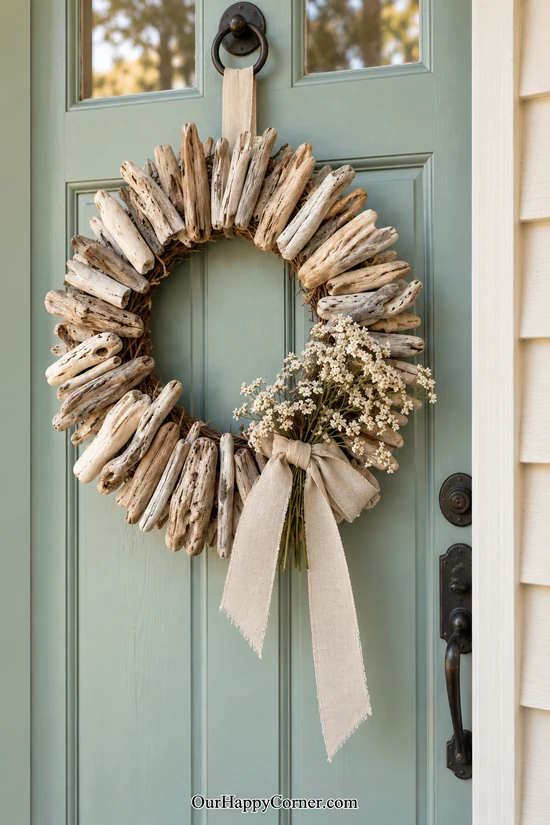
A coastal home can still have a lovely winter entrance. Pale driftwood gives you that weathered, quiet texture without asking for pine branches or faux snow.
The small white flower bundle and flax ribbon soften the wood. Against the seafoam door, the natural colors feel relaxed and easy to live with.
Use short, clean, fully dry driftwood pieces secured around a strong vine or wire base. Support each piece with wire through existing openings or small drilled holes; let the fastening carry the weight rather than relying on a decorative bow.
This winter wreath can become surprisingly heavy, so weigh the finished piece and use a suitable hanger. Choose faux flowers if the doorway is damp, and keep the ribbon clear of the latch.
17. Cream Grasses and Bleached Foliage
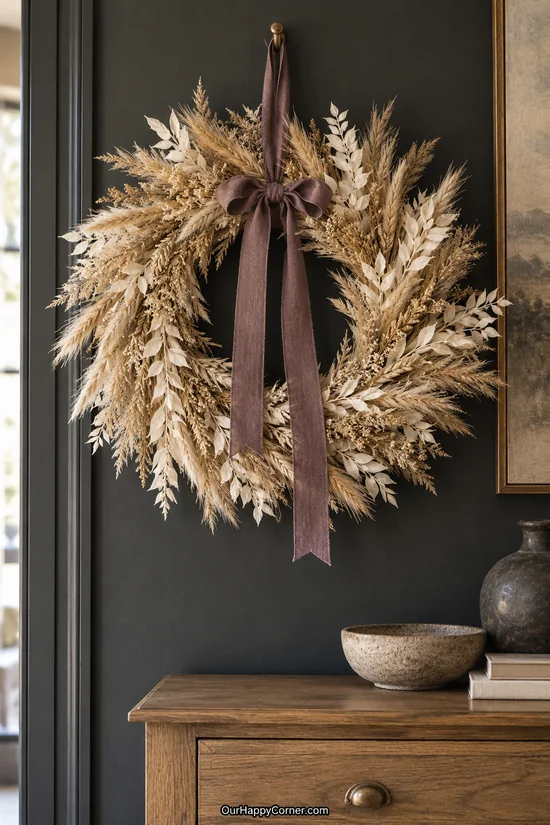
Creamy dried foliage can look especially cozy against a dark wall. The fine grasses catch the light while the broader pale leaves give the arrangement a little structure.
The dusty plum ribbon adds depth without overpowering the natural materials. This would be a lovely choice for an entryway that needs something softer above a dresser.
Build the ring with small overlapping bundles of dried grasses and bleached ruscus. Attach them securely to a vine base and trim the outer tips gradually, keeping some natural movement.
Hang this winter wreath indoors and away from radiators, fireplaces, or places where people brush past it. A simple bowl underneath is plenty; the wreath already brings lots of texture.
18. Rose Hips and Copper Beech Leaves
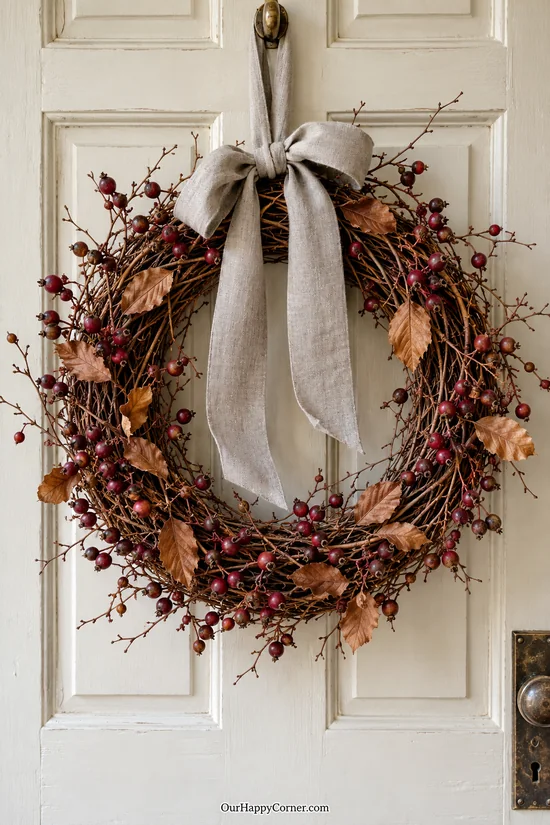
Deep burgundy rose hips bring a little color without the bright red look of a holiday wreath. The bare stems and dry beech leaves give this design a more natural, late-season character.
I like the gray linen bow with the cream door. It lets the richer berries stand out without adding another strong color.
Weave short rose-hip stems through a grapevine base and secure them with fine wire. Add a few dried beech leaves where you want warmth, keeping the stems visible between the clusters.
Use this winter wreath under cover, or choose realistic faux stems for an easier display. Leave some irregularity around the edge; that is part of what makes a branch-based arrangement feel lovely.
19. A Felt Snowdrop Hoop
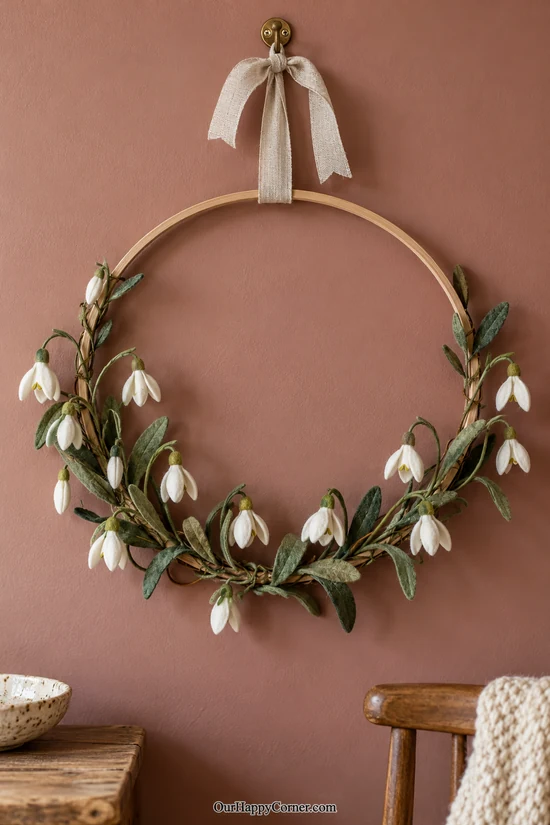
This little hoop has a gentle handmade feel that is lovely for the quieter weeks after Christmas. The white snowdrops are small enough to keep the open circle light and airy.
The felt leaves and hanging flower heads soften the wooden hoop. A dusty rose wall adds warmth while letting the white petals show clearly.
For a similar winter wreath, make small blossoms from three elongated white felt petals around a short inner petal piece. Glue them securely to wrapped wire stems, then bind the stems along the lower half of an embroidery hoop with florist wire.
Add narrow felt leaves over the joins and finish with a linen hanging loop. Keep it indoors, where the delicate flowers can stay dry and the soft materials can be enjoyed up close.
Final Thoughts
The best winter wreath is one that suits your home and makes you happy when you walk through the door. Choose a texture you love, give it a little room to stand out, and keep the rest of the display simple. A new ribbon or a few carefully placed branches may be all your existing wreath needs. It is a lovely little refresh for the quieter weeks after Christmas.