This post may contain affiliate links. If you make a purchase through these links, I may earn a small commission at no extra cost to you. Thank you so much for your support.
Spice rack organization can make dinner prep feel a whole lot easier, especially when finding the paprika usually means moving six other bottles first.
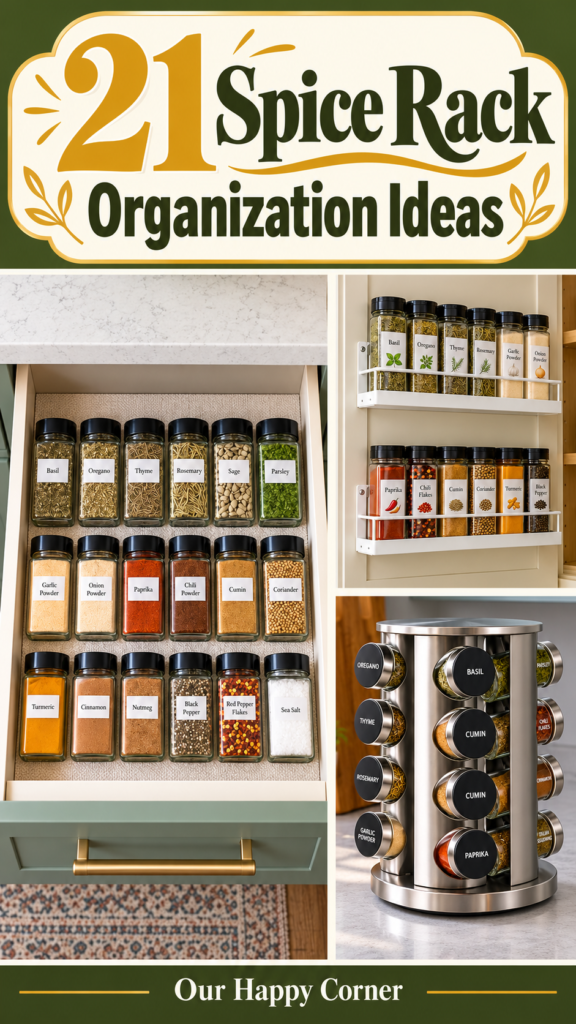
Give those little jars a proper home, and you can spend more time cooking and less time hunting through the cabinet.
Maybe you have a shallow drawer, a packed pantry, or just a little space on the counter. There are plenty of ways to make your spices easier to find without taking on a kitchen remodel.
These ideas include simple organizers, clever cabinet upgrades, and a few pretty options you can leave out. Pick the one that fits the way you cook, then build your setup around the bottles you actually use.
Start with the Spices You Actually Use
Before buying an organizer, gather your spices in one place and check what you have.
You might find two open jars of cinnamon, a blend you never reach for, or refill packets hiding behind the baking supplies.
Check package dates and replace seasonings that have lost their aroma or flavor. Keep the spices you use most often together, and give duplicates and bulk refills a separate spot so they do not crowd your everyday collection.
Matching jars can look lovely, but you can absolutely keep your McCormick, Badia, Simply Organic, and other store bottles. If you do transfer a seasoning, keep its ingredient, allergen, and best-by information with the new container.
Choose a Spot That Fits Your Kitchen
Measure the usable width, depth, and height of your storage space before choosing a rack. Include the tallest bottle with its lid on, and allow room to lift jars out, open doors, or turn a rotating organizer.
A drawer works well when you want to read labels from above, while a riser makes rows easier to see inside a cabinet. If you tend to cook with the same few seasonings, a small caddy or turntable may be all you need.
Store dried herbs and spices tightly capped in a cool, dry spot away from heat, moisture, and direct sunlight, following any specific package directions.
McCormick’s storage guidance also recommends using a dry measuring spoon and keeping open bottles away from steam.
Spice Rack Organization
1. Lay Spice Jars Flat in Straight Drawer Rows
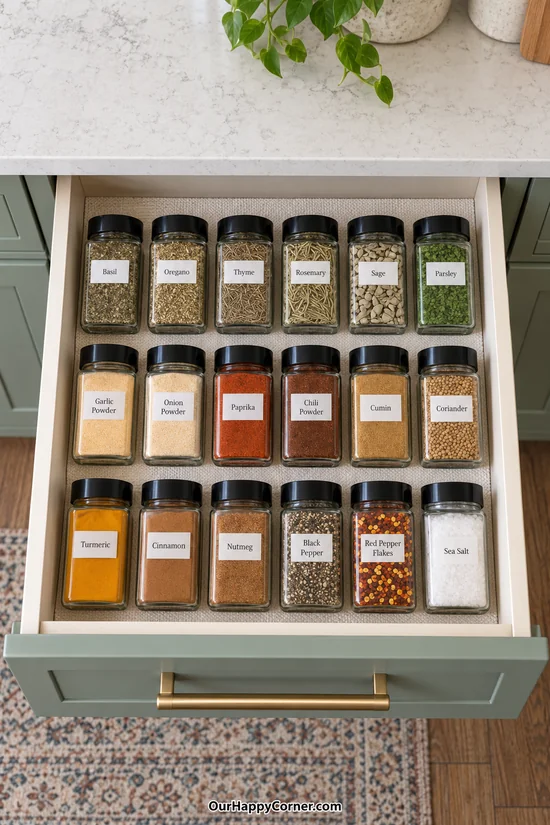
A shallow drawer can become a wonderfully easy place to find your spices when every label faces up. Lay tightly closed jars flat in straight rows so you can scan the whole collection as soon as you open it.
Start with a nonslip drawer liner and low dividers that keep the bottles from rolling together. Measure a jar lying on its side, including the cap, to make sure the drawer closes comfortably over it.
Put your most-used seasonings in the front row and arrange the rest alphabetically if that feels natural to you.
Leave a little space at the end of each row so you can lift out a jar without nudging the entire lineup.
2. Use Lid Labels for an Upright Spice Drawer
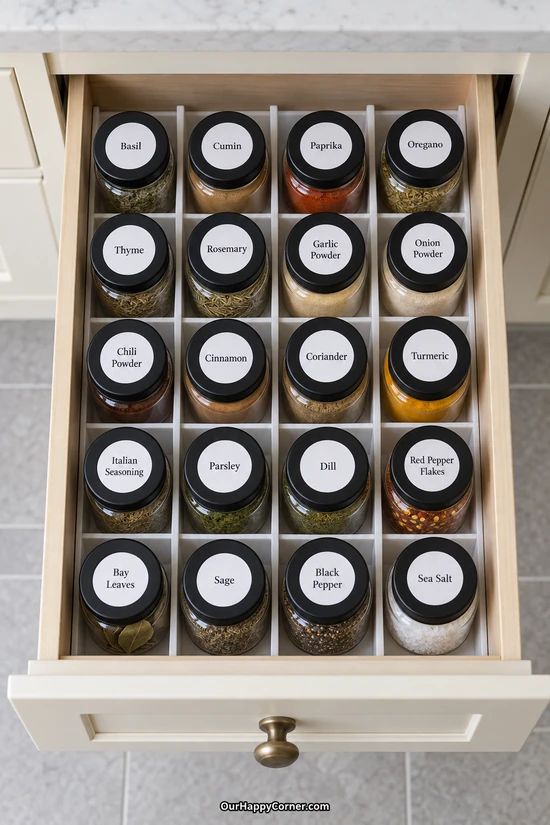
Have a deeper drawer to work with? Standing your jars upright lets you fit a collection into a smaller footprint, with lid labels doing the work of helping you find everything.
Check the drawer’s clearance before filling it, since a lid that catches underneath the counter will make the setup frustrating.
Add adjustable dividers or a grid insert with compartments wide enough for your largest bottle.
Use clear, readable names on the lids, including the full names of blends that might otherwise look alike. Keep a side label too, so you can identify the jar once it is out on the counter.
3. Give Cabinet Spices a Three-Step Riser
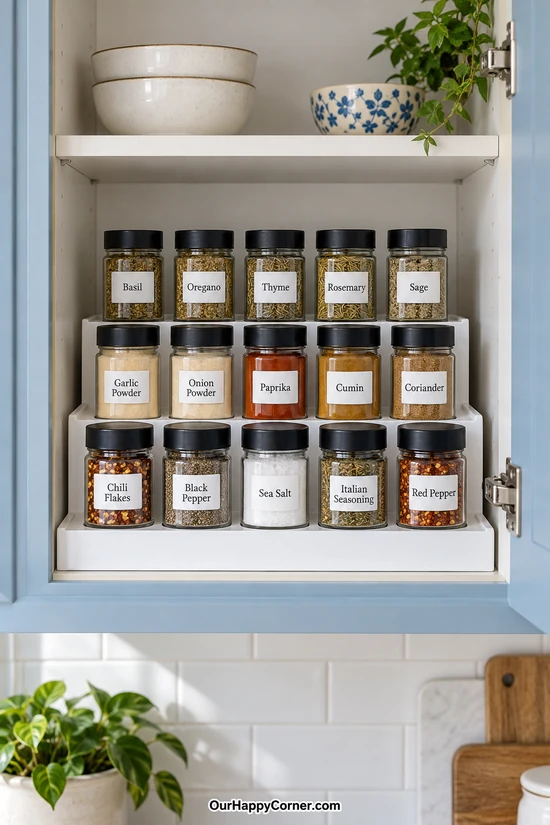
If the back row of your cabinet always disappears, a stepped riser is a simple fix. Each raised level helps you see the labels behind the bottles at the front.
Choose a riser with steps deep enough to hold each bottle’s base securely. Check the height of the tallest jar on the top step, especially if another shelf sits just above it.
Keep taller bottles toward the back and shorter ones at the front so the arrangement stays easy to read.
You can mix original packaging with matching jars here, which makes this a lovely option when you want a tidier cabinet without decanting everything.
4. Bring a Deep Cabinet Forward with a Pullout Rack
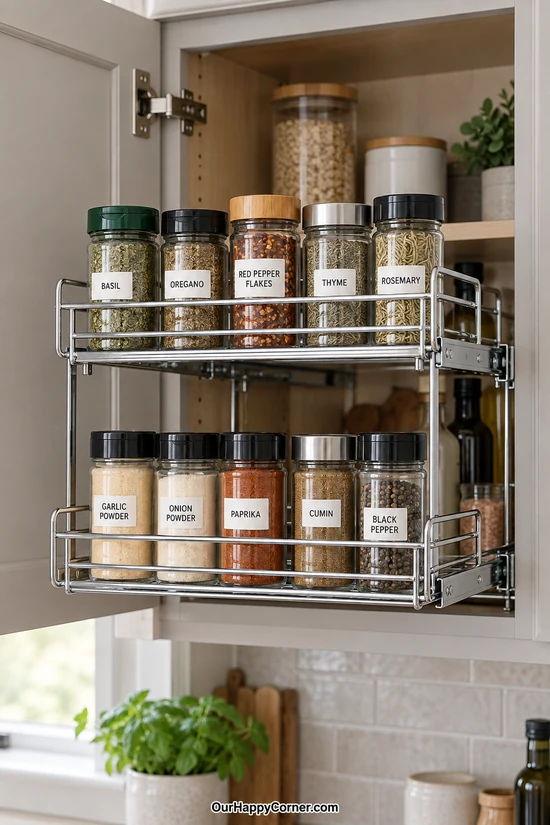
Deep cabinets are useful until your favorite seasoning ends up behind everything else. A sliding spice rack brings those back bottles forward so you can reach them without emptying the shelf.
Look for a cabinet-mounted organizer with sturdy slides and side rails that suit your bottle sizes. Measure the clear opening past the hinges and door frame, then follow the manufacturer’s mounting instructions.
Use the front section for the spices you reach for daily and reserve the back for less frequent favorites.
Leave enough space between levels to lift out your tallest bottle while the rack is extended.
5. Make a Narrow Base Cabinet Work Harder
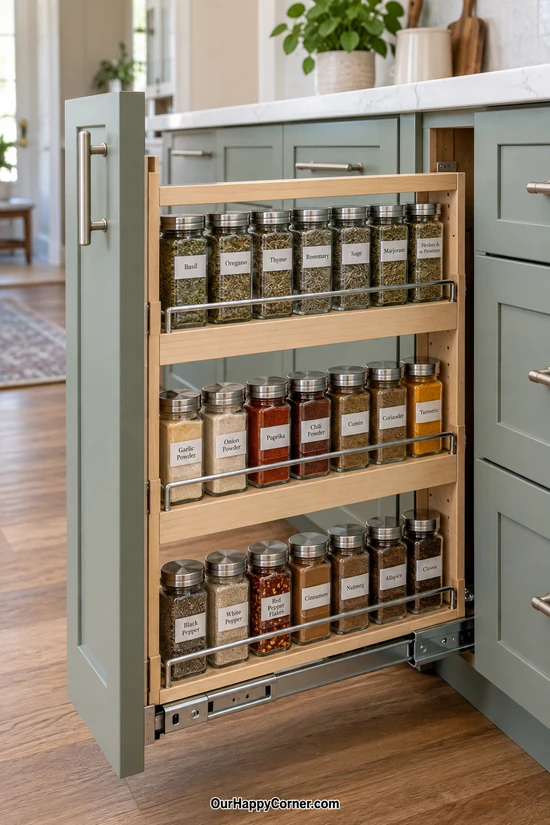
A narrow base cabinet can be a great home for a larger spice collection. A purpose-built pullout turns that skinny space into rows you can reach from the side.
Choose a unit designed for your cabinet’s interior dimensions and door style, rather than assuming every narrow organizer will fit.
Some models attach to a door front, while others sit behind a separate hinged door, so check the installation requirements first.
Arrange jars one bottle deep on each shelf to keep their names visible. Group frequently used seasonings at the easiest height and use lower shelves for bottles you only need occasionally.
6. Add Shallow Racks Inside a Cabinet Door
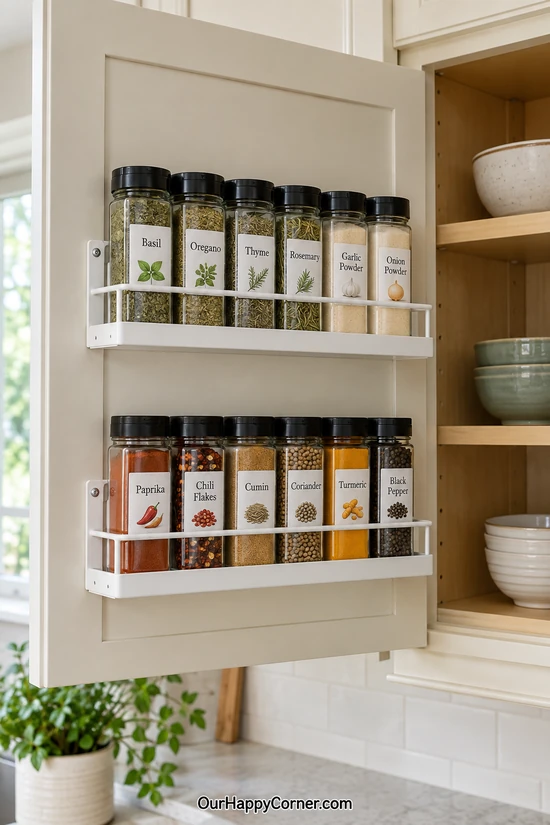
The inside of a cabinet door can give small spice bottles a useful home. Shallow racks keep the jars in a single row, making this especially handy for everyday herbs and seasonings.
Measure the gap between the closed door and the cabinet shelves before choosing a rack. Both the rack and the jars need to fit in that space without bumping the shelf edges or hinges.
Mount the racks with hardware suitable for the door’s construction and the organizer’s loaded weight.
Keep heavier containers on the cabinet shelves and use the door space for smaller bottles that are comfortable to grab.
7. Turn the Pantry Door into Spice Storage
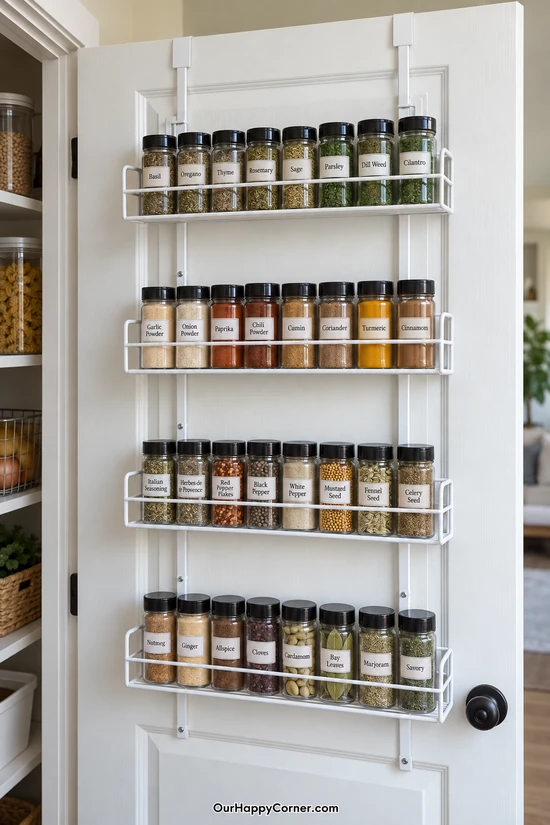
A pantry door organizer can free up shelf space while keeping plenty of spices together. The long vertical layout works well when your collection has outgrown one small cabinet.
Choose an over-the-door system that fits your door thickness and includes the stabilizing hardware specified by the manufacturer. Test that the door closes and that loaded baskets clear the pantry shelves before settling on their positions.
Adjust the basket spacing around your actual bottles, with everyday seasonings at a comfortable height.
Give baking spices and specialty blends their own rows so you can head straight to the group you need.
8. Use a Simple Cabinet Turntable
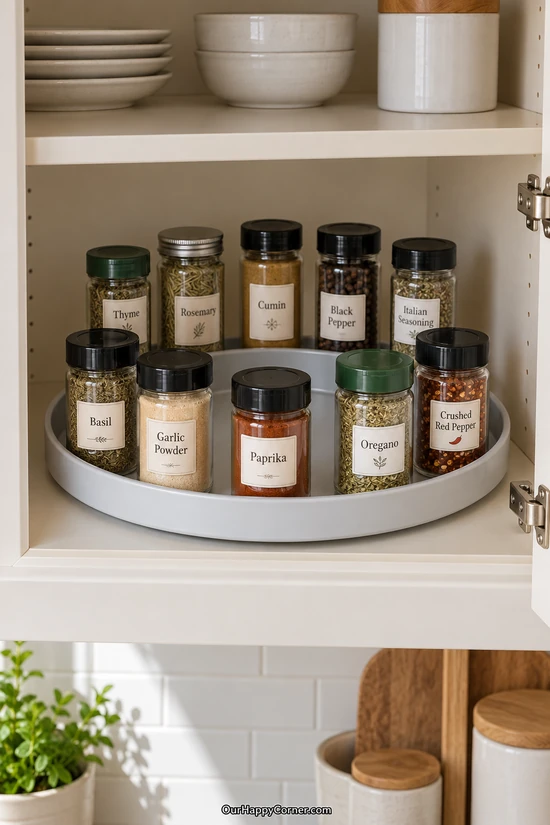
A single-level turntable is one of the easiest spice rack organization ideas to try. A quick spin brings the bottles at the back within reach, which is helpful in an awkward cabinet corner.
Measure the turntable’s full diameter and make sure it rotates freely past the door frame and hinges. A raised rim helps keep the jars contained as you turn it.
Place the bottles in a loose ring with their labels facing outward, and avoid packing the center so tightly that it becomes hard to reach.
If your collection is large, use separate turntables for different groups instead of crowding every spice onto one.
9. Stack Small Jars on a Two-Tier Turntable
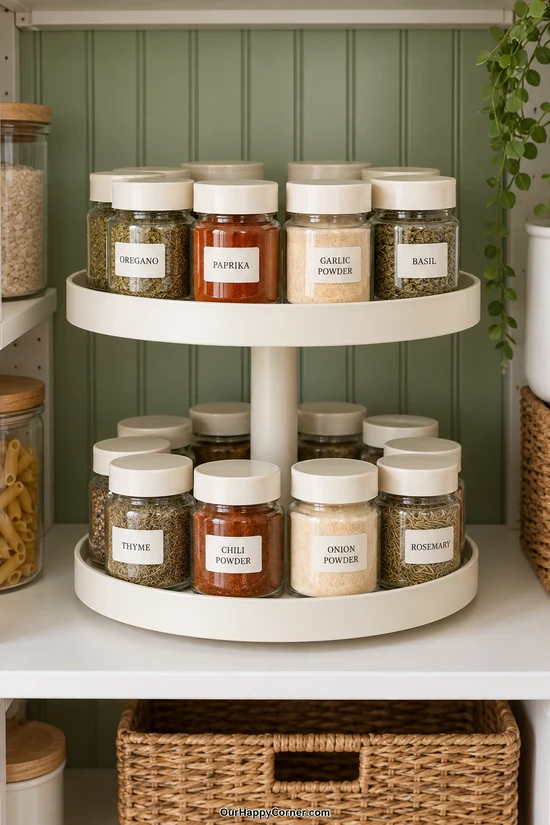
Short jars are a good match for a two-tier turntable when you want to use more of a cabinet’s height. You get two levels of storage without taking up the footprint of two separate trays.
Check the gap between tiers against the height of your jars, allowing extra room to lift them out. The upper tier also needs to clear the shelf above when it is loaded.
Keep the jars near the outer edges so their names remain easy to read as the organizer turns.
Divide the levels into groups, such as savory seasonings below and baking spices above, so you know where to start looking.
10. Try Pull-Down Trays for an Upper Cabinet
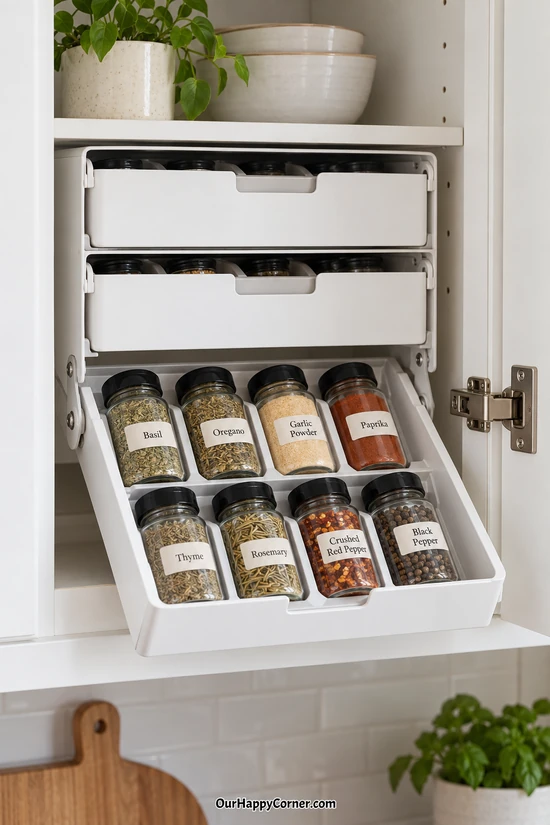
Pull-down spice trays make an upper cabinet feel much more accessible. The trays slide forward and tilt down, bringing the labels into view instead of leaving you to search behind a front row.
Choose a freestanding organizer that fits your shelf and has slots or adjustable dividers for your bottles. Check its tray-clearance requirements so each tray can extend and lower without hitting the cabinet door.
Label the tray fronts by cooking category or alphabet range to make finding a spice even quicker.
Keep the organizer on a shelf you can operate comfortably, since the pull-down motion does not make an otherwise unreachable cabinet safe to use.
11. Mount Slim Spice Ledges on the Wall
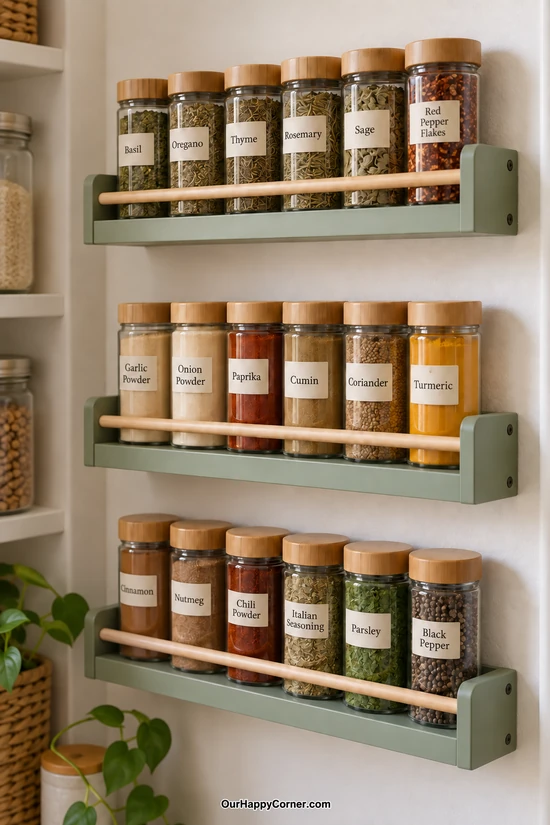
Slim wall ledges can turn a small stretch of kitchen wall into useful storage. This is a pretty choice when you want to free up a drawer and keep a modest collection close to your prep area.
Choose shelves deep enough for the jars’ bases, with a front rail that helps keep them in place. Secure the shelves to studs or use anchors rated for your wall type and the loaded shelf weight.
Space the ledges so you can lift each jar above the rail without catching the shelf overhead.
Pick a wall away from cooking heat and strong sunlight, then keep the shelves to a manageable collection you use regularly.
12. Arrange Magnetic Tins on a Pantry Panel
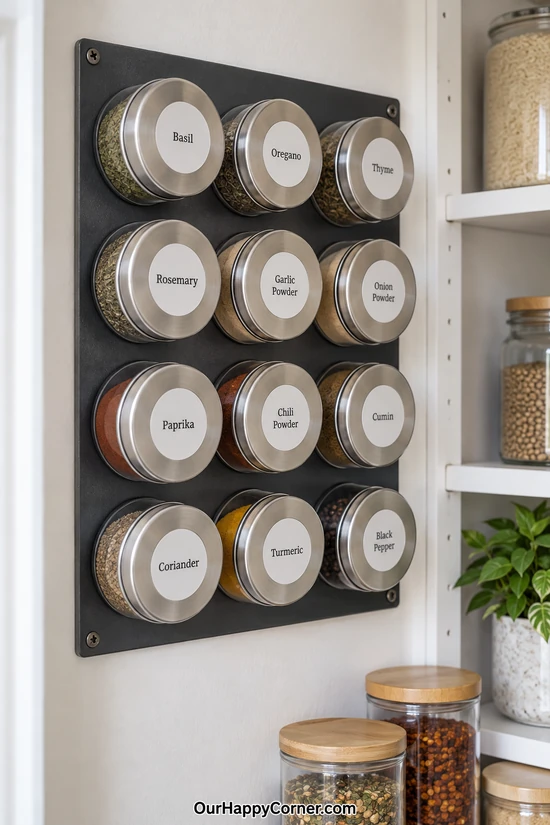
A magnetic panel gives compact spice tins a home without using a shelf. It can work especially well on a pantry wall or another narrow area where a regular rack would stick out too far.
Use food-safe spice containers with magnetic bases designed to hold their filled weight on a compatible steel panel. Attach the panel securely according to its instructions and check that the tins stay put before filling the whole layout.
Label the outward-facing lids and leave finger room between the tins so you can remove one easily.
Keep the arrangement in a cool area out of direct sunlight, especially when the containers have clear lids.
13. Use the Space Beneath a Pantry Shelf
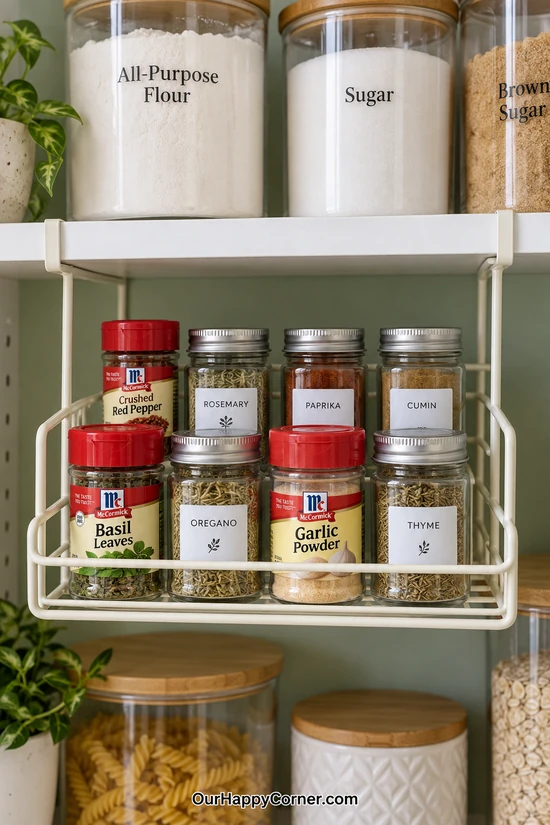
An under-shelf basket can put an unused gap to work without adding another full shelf. It is a handy spot for a small set of spices when your pantry shelves are spaced far apart.
Choose a basket whose support arms fit the shelf’s thickness and whose base supports your smallest bottles. Check that there is enough clearance below it for the jars and enough room above them for your hand.
Group short bottles together so they are easier to lift out of the basket.
Keep taller containers on the regular shelf, where they will not catch against the underside of the shelf above.
14. Sort Spices into Bins by Cooking Category
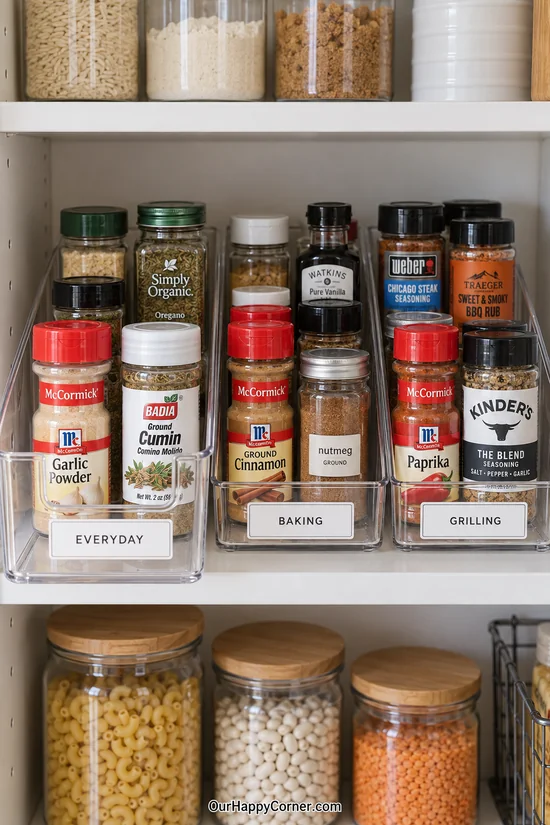
If you prefer cooking categories to alphabetical order, labeled bins make the setup feel intuitive. A bin for everyday meals, one for baking, and another for grilling gives each group a clear home.
Use narrow, easy-to-clean bins with handles or an accessible front edge so you can pull out the whole group. Keep your familiar store bottles in their original packaging and choose bin widths that accommodate the larger ones.
Give each spice one main home, even if you use it in several kinds of recipes.
Put the busiest bin near the front and leave a little room in each one so returning a bottle does not become a puzzle.
15. File Refill Packets Upright
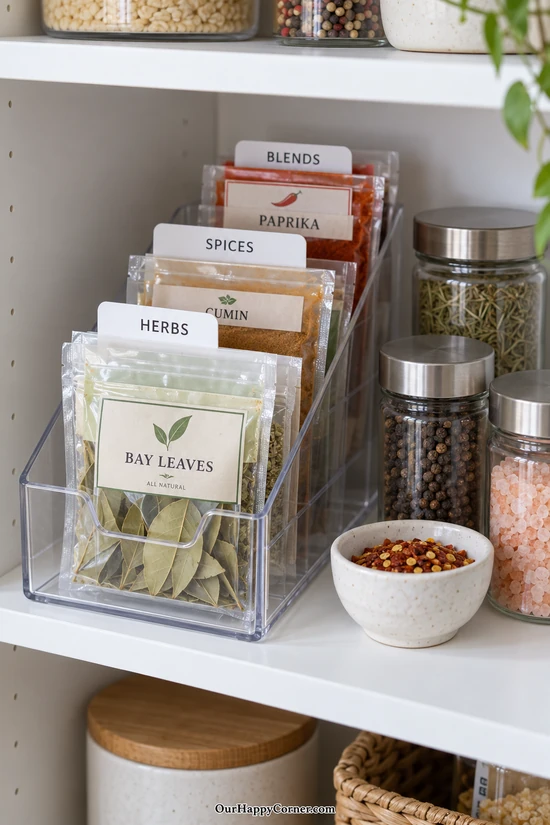
Spice packets are much easier to manage when they stand upright instead of lying in a pile. A small divided organizer lets you flip through them and find what you need without scattering pouches across the shelf.
Choose a washable bin with sections that fit your packet widths and add dividers for herbs, spices, and blends. Keep each seasoning sealed in its original pouch, or transfer it to a food-safe airtight container if the package will not reseal.
Place older packets toward the front within each category so you reach for them first.
Keep the printed ingredient and date information attached, and store the file where it stays dry and away from heat.
16. Give Bulk Spices and Refills Their Own Zone
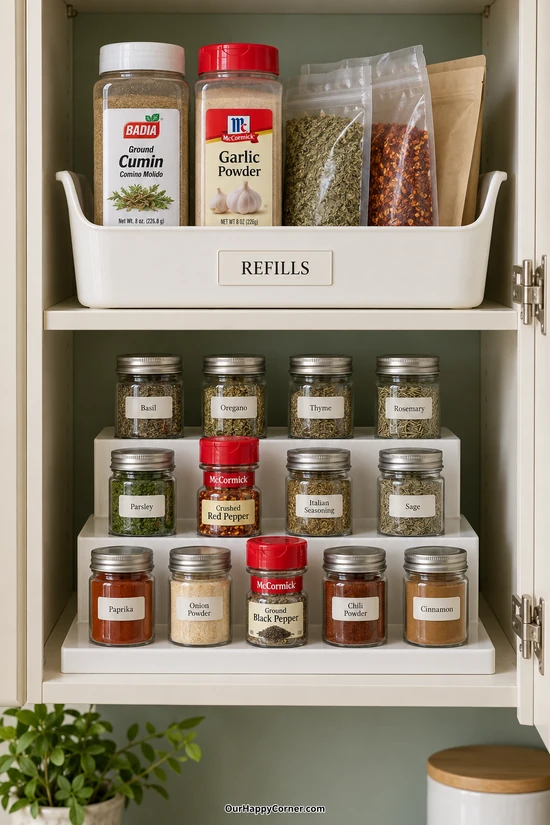
Bulk containers can quickly take over a rack meant for small everyday jars. Keeping refills in a separate bin makes the main spice area easier to use and lets you see what is already waiting in the pantry.
Label a sturdy bin for refills and put it on a shelf where you can lift it comfortably when loaded. Keep everyday amounts in your main organizer and leave the remaining spices sealed in their original packages.
Finish an older batch before washing, fully drying, and refilling its jar, rather than repeatedly topping it off.
A quick refill-bin check before grocery shopping can also help you avoid buying another bag of something you already have.
17. Carry Your Favorites in a Small Spice Caddy
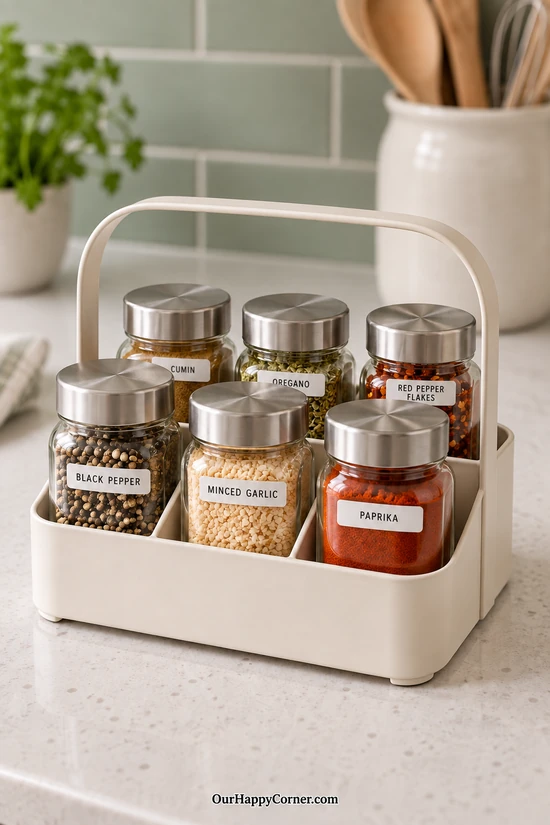
A handled caddy is a sweet little solution when you cook with the same handful of spices most nights. You can bring the whole set to your prep area and return it to its shelf when dinner is done.
Choose a stable caddy with sides or compartments that keep the bottles upright as you carry it. Fill it with a small everyday selection, leaving enough room to grip each jar without lifting its neighbors.
Use matching jars if you love the tidy look, or size the caddy around the bottles you already own.
Give it a permanent storage spot away from the stove so it stays convenient without sitting in cooking heat.
18. Create a Little Countertop Spice Cupboard
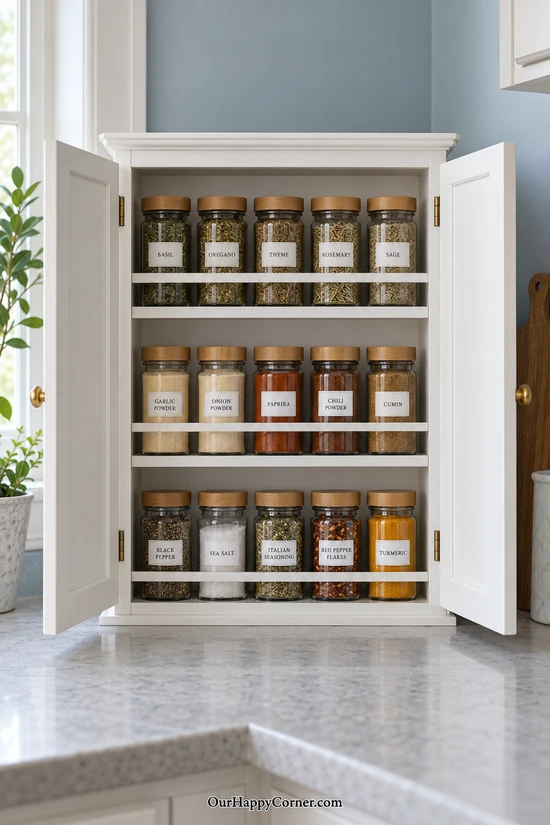
A small freestanding cupboard gives spices a dedicated home when built-in storage is tight. Closed doors also help the counter feel calmer than a collection of loose bottles.
Look for a stable cabinet with shelves that fit your jars and doors that open without blocking your work area.
Measure the counter depth first so you still have a comfortable space for meal prep in front of it.
Keep the most-used spices on the easiest shelf and use the others for baking or specialty seasonings. If you enjoy a cozy look, our vintage pink kitchen ideas offer lovely inspiration for choosing colors and finishes around a little cupboard like this.
19. Choose a Freestanding Bamboo Spice Stand
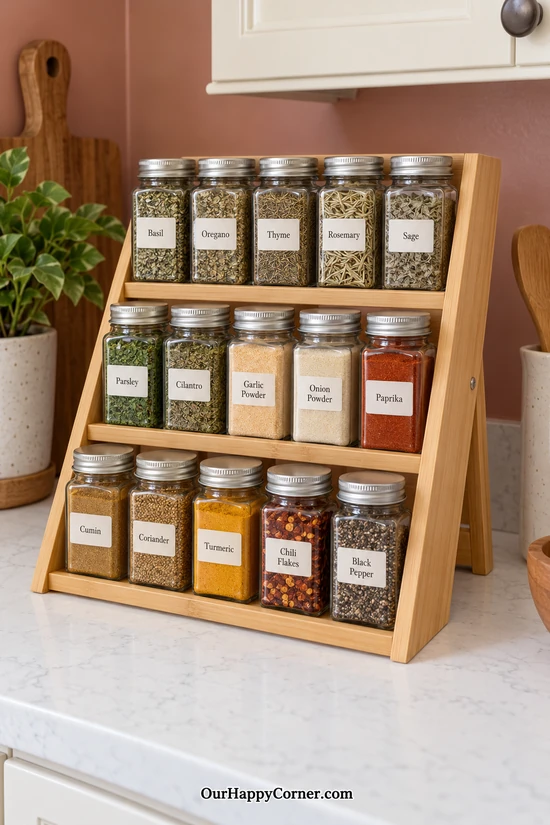
A bamboo spice stand adds a warm touch while keeping the collection arranged in easy-to-see steps. It is a useful alternative to a cabinet riser when you have a shaded stretch of counter available.
Choose a sturdy stand with level shelves deep enough to support each jar completely. Check that you can lift bottles from the lower rows without catching the shelf or jars behind them.
Use the front row for daily favorites and the higher rows for seasonings you reach for less often.
Keep the area around the stand open so it remains a working part of the kitchen, with enough space nearby to set down the jar you need.
20. Keep a Compact Collection in a Spice Carousel
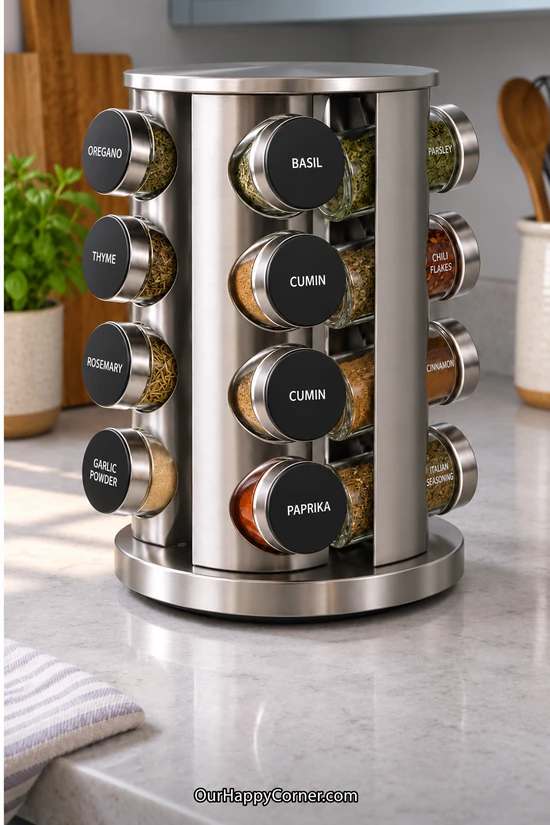
A stainless steel spice carousel gives a smaller collection a neat, dedicated spot. Individual holders keep the jars arranged around the stand, and a gentle turn brings each one to the front.
Check the number of holders against your collection and choose a model with jars you can refill easily. The holders are usually made for a specific bottle shape, so ordinary grocery-store jars may need a separate home.
Use readable labels on the ends or lids that face outward when the bottles are stored.
Fill the carousel with the seasonings you actually cook with, and keep any extra bottles together in a nearby cabinet.
21. Use a Three-Tier Rotating Organizer for Mixed Bottles
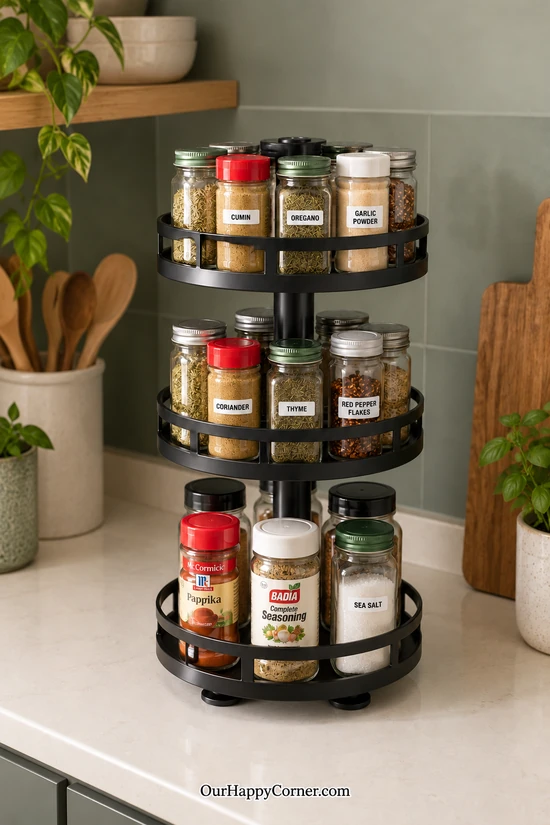
A three-tier rotating organizer can help when you have a mix of bottle sizes and a little vertical space to spare. Open trays give you more flexibility than a carousel with fixed individual holders.
Measure the gap between trays and the organizer’s overall height before deciding where it will live. Choose one with stable construction and raised rims, then test that it rotates smoothly with your bottles in place.
Place heavier bottles on the bottom level and shorter jars on the levels where they fit comfortably.
Give each tier a category and keep labels facing outward so a quick spin helps you find what you need.
Final Thoughts
The best spice rack organization setup is one you can keep using on a busy weeknight. Choose the space that works for your kitchen, give each seasoning a clear home, and make it easy to put everything back.
Start with one drawer, one shelf, or just your everyday favorites. A few thoughtful changes can make your kitchen feel more organized every time you cook.